N-(3-Aminopropyl)-2-pipecoline
N-(3-Aminopropyl)-2-pipecoline (CAS 25560-00-3) is a difunctional aliphatic amine with the molecular formula C9H20N2 and a molar mass of 156.27 g/mol. It pairs a 2-methylpiperidine (2-pipecoline) ring with a pendant 3-aminopropyl chain, giving a primary amine alongside a tertiary ring nitrogen. Supplied as a liquid of around 96% assay, it serves chiefly as a heterocyclic building block in chemical synthesis and as an HPLC internal standard. Tech Serve Solutions supplies and exports it worldwide.
- IUPAC
- 1-(3-Aminopropyl)-2-methylhexahydropyridine,2-Methyl-1-piperidinepropanamine
- Synonyms
- N-(3-Aminopropyl)-2-pipecoline1-(3-Aminopropyl)-2-methylhexahydropyridine2-Methyl-1-piperidinepropanamine2-Methylpiperidine-1-propanamine3-(2-Methylpiperidin-1-yl)propan-1-amineCAS 25560-00-3
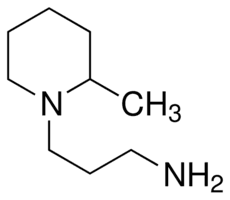
Heterocyclic building block
Used as a C9 piperidine building block in chemical synthesis, where its primary amine and 2-methylpiperidine ring provide convenient sites for amide formation, alkylation and further functionalisation.
Synthesis of thiourea derivatives
Documented in the preparation of novel piperidinylethyl, phenoxyethyl and fluoroethyl thiourea compounds investigated for anti-HIV activity, where it contributes the substituted piperidine moiety.
HPLC internal standard
Employed as an internal standard in the HPLC determination of arginine, agmatine and their metabolites, supporting reproducible quantification in analytical workflows.
Amine intermediate for research
Its combination of a primary aliphatic amine and a tertiary ring nitrogen makes it a useful intermediate for ligands, chelating motifs and structure-activity studies in laboratory research.
| Molecular weight | 156.27 |
|---|---|
| Empirical formula | C9H20N2 |
| Assay | 96% |
| Boiling point | 96-97 °C/15 mmHg(lit.) |
| Density | 0.889 g/mL at 25 °C(lit.) |
| Refractive index | n20/D 1.4765(lit.) |
| Application | N-(3-Aminopropyl)-2-pipecoline was used as internal standard during the determination of arginine, agmatine and their metabolites by HPLC1. It was used in the synthesis of novel piperidinylethyl, phenoxyethyl and fluoroethyl thiourea compounds having anti-HIV activity2. |

Hazard statements
- H314Causes severe skin burns and eye damage
Precautionary statements
- P280Wear protective gloves, clothing and eye/face protection
- P305IF IN EYES
- P310Immediately call a POISON CENTER or doctor
| Protective equipment | Faceshields, full-face respirator (US), Gloves, Goggles, multi-purpose combination respirator cartridge (US), type ABEK (EN14387) respirator filter |
|---|---|
| Flash point | 88 °C / 190.4 °F |
| Transport (UN / ADR) | UN 3267 8 / PGIII |
| Water hazard class (WGK, DE) | 3 |
| Hazard codes (EU) | C |
| Risk statements (R) | 34 |
| Safety statements (S) | 26-27-36/37/39-45 |
Hazard information is provided for guidance. Always consult the product Safety Data Sheet (SDS), available on request, before handling.
Documentation
Every batch ships with a Certificate of Analysis covering assay, identity and purity; the grade is confirmed against your enquiry. Safety Data Sheets and technical data sheets are available on request.
Supply & logistics
Samples for technical evaluation; bulk MOQ by grade and packaging. In-stock material ships in 7–10 working days, worldwide, with full export documentation.
What is N-(3-Aminopropyl)-2-pipecoline used for?
+
It is used mainly as a heterocyclic building block in chemical synthesis and as an analytical internal standard. Documented uses include the synthesis of piperidinylethyl, phenoxyethyl and fluoroethyl thiourea compounds with anti-HIV activity, and as an internal standard for the HPLC determination of arginine, agmatine and their metabolites.
What is the CAS number and molecular formula of N-(3-Aminopropyl)-2-pipecoline?
+
Its CAS number is 25560-00-3 and its molecular formula is C9H20N2 (Hill notation), with a molecular weight of 156.27 g/mol. The MDL number is MFCD00006517 and the EC number is 247-102-3.
What grade and purity does Tech Serve Solutions supply?
+
We supply N-(3-Aminopropyl)-2-pipecoline as a research and technical grade liquid with a typical assay of around 96%. We do not represent it as USP, BP or EP pharmacopoeia grade. A certificate of analysis is provided with each batch, and reference physical data include refractive index n20/D 1.4765, boiling point 96-97 degC at 15 mmHg and density 0.889 g/mL at 25 degC.
What are the safety and handling requirements?
+
The product is classified as corrosive. It carries GHS05 with the signal word Danger and hazard statement H314 (causes severe skin burns and eye damage). Handle only with suitable gloves, goggles or faceshield and respiratory protection, avoid all contact with skin and eyes, and consult the Safety Data Sheet before use. Always refer to the current SDS for full precautionary measures.
How is N-(3-Aminopropyl)-2-pipecoline packed, shipped and exported?
+
It is packed in tightly sealed, compatible containers appropriate to the order quantity and labelled in line with GHS requirements. As a Class 8 corrosive liquid it is shipped under UN 3267, packing group III, in accordance with applicable ADR, IMDG and IATA dangerous-goods regulations. Tech Serve Solutions exports globally with complete documentation.
How do I request a sample or quote?
+
Contact Tech Serve Solutions with your required quantity, grade and destination, and our team will respond with availability, lead time and export details. Samples can be arranged on request, subject to dangerous-goods handling for this corrosive material.
▶ Related products
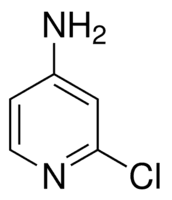
4-Amino-2-chloropyridine
C5H5ClN2
Heterocyclic Building Blocks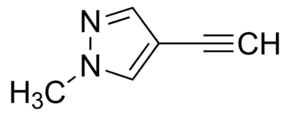
4-Ethynyl-1-methyl-1H-pyrazole
C6H6N2
Heterocyclic Building Blocks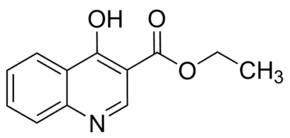
4-Hydroxyquinoline-3-carboxylic acid ethyl ester
C12H11NO3
Heterocyclic Building Blocks
4-isocyanatopyridine
C6H4N2O
Heterocyclic Building Blocks
5-Chloro-2,8-dimethylquinoline
Heterocyclic Building Blocks
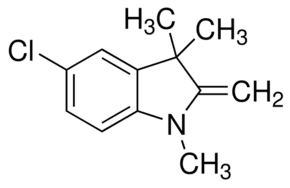
5-Chloro-2-methylene-1,3,3-trimethylindoline
Heterocyclic Building Blocks
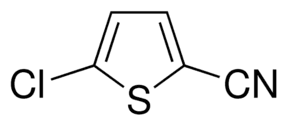
5-Chloro-2-thiophenecarbonitrile
Heterocyclic Building Blocks
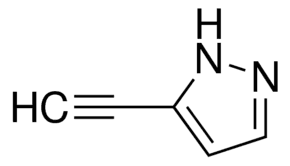
5-ethynyl-1H-pyrazole
C5H4N2
Heterocyclic Building Blocks